The story behind the making of the film
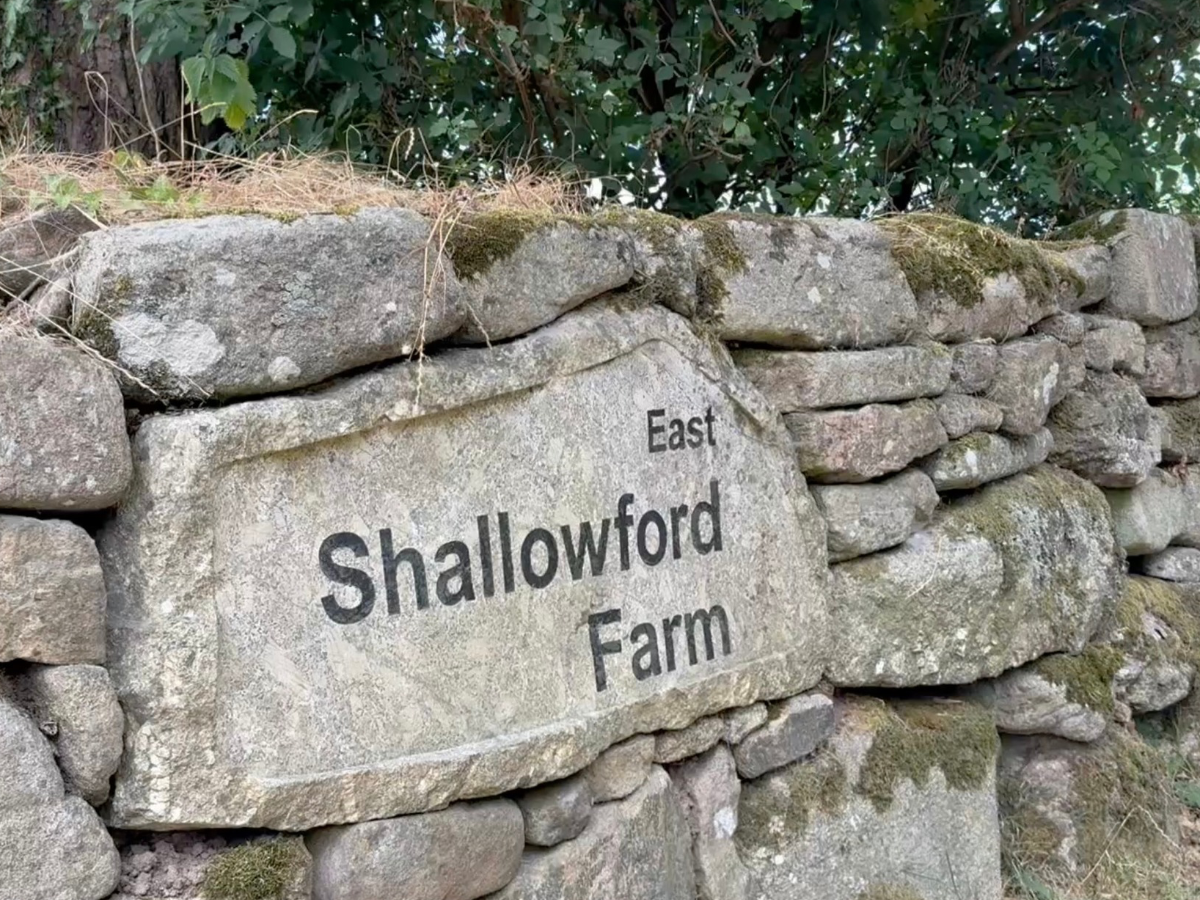
Twenty-two years after making four short films about East Shallowford Farm for the regional BBC TV news programme, Spotlight, I found myself back on Dartmoor, camera in hand, making a new film to mark its 50th anniversary. Watch the video - then read the story behind the making of the film.
2026 turned out to be quite a summer…
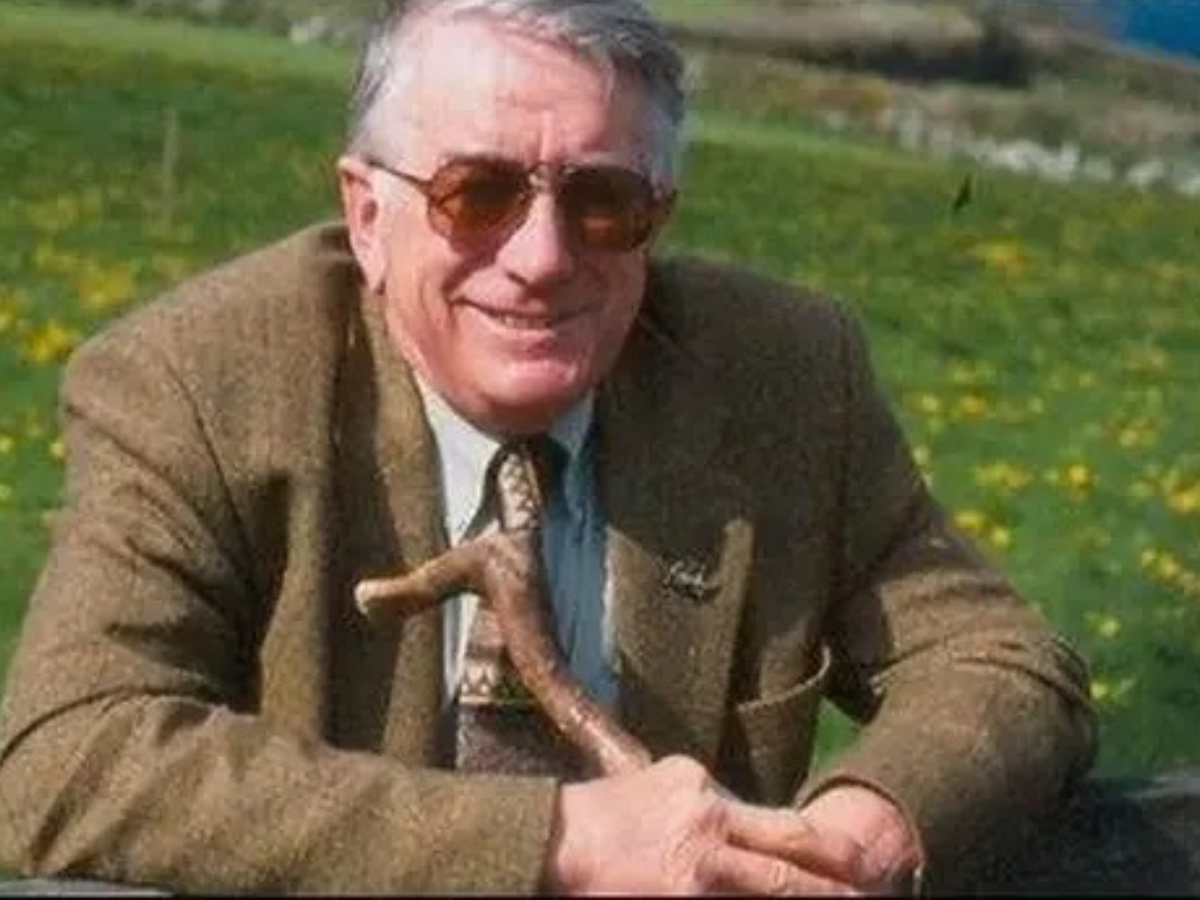
Hullo There!
If you ever listened to BBC Radio Devon back in the day, you might remember Tony Beard who presented on the station for 30 years.
Tony was a farmer who was born and bred on Dartmoor. He lived and breathed the place.
He and his wife Wendy lived in a farmhouse in Widecombe-in-the-Moor, where muddy boots stood at the back door, his sheepdog was never far from his side and the smell of Wendy's tasty fruit cake baking in the range would be waiting to greet you as you arrived.
Tony was also a comedian and entertainer. He performed around the area as The Wag From Widecombe, with a style of humour that was clever, observational and gloriously clean. No smut required. He even recorded songs, including one that was regularly asked for on his Sunday lunchtime request show - “Out Come Mother and Me.”
This year marks the 10th anniversary of his passing. He was a lovely, lovely man and a good friend. But the thing I remember most about him was his greeting.
“Hullo There!” he'd say, in that wonderful broad Devon dialect. It became his catchphrase and those words began every show.
I produced his Sunday programme for a while, but it was through another BBC Radio Devon series that Tony first introduced me to East Shallowford Farm.
Together, we recorded a weekly short audio feature called Dartmoor Diary, which fitted neatly into the afternoon show. Tony knew the moors and their people inside out, and I had the absolute pleasure of being his co-presenter, basically the townie being taken out to see what he could discover.
And discover things we did.
There was the chap generating his own electricity from the stream running through his land. Another who made wands from branches gathered in the magical Wistman's Woods.
We went looking at ancient settlements, visited the site of Kitty Jay's grave and heard about the flowers that mysteriously appeared there every year.
We explored the ghostly story of the Hairy Hands, said to take control of motorists' steering wheels on a dark Dartmoor road. We learnt why sphagnum moss had been so useful during the war and heard about the church clock whose face spells out ‘MY DEAR MOTHER’ instead of the numbers one to 12.
I could go on, the list is long. And as you've probably gathered, I really enjoyed those outings - and Wendy’s fruit cake!
Looking back, I'm amazed at just how much Tony introduced me to. He had an extraordinary knack for finding interesting people and stories, and an equally impressive knowledge of the place he called home. He helped me see Dartmoor as far more than an undulating landscape. It was full of history, character, mystery and people with stories to share.
And somewhere along the way, he took me to East Shallowford Farm.
That’s where I met Miss Braund and her friend Rosemary, and saw the remarkable work they were doing with children from inner-city London.
Miss Braund was in her 80s, a commanding, matriarchal figure whose age had done absolutely nothing to diminish her presence. She was a force to be reckoned with - but most definitely a force for good.
Tony opened a metaphorical door to that world for me. I didn't know back then that, more than two decades later, I'd be walking back through it.
Happy Anniversary
Let’s fast-forward to 2026.
The 50th anniversary open day at Shallowford Farm happened to fall on the same day as my birthday and I decided to pay them a visit.
I arrived about an hour before the celebrations were due to finish, signed in at the table by the gate and tapped my phone against the electronic collecting tin to make a donation towards the fundraising.
Robert Musgrave MBE, one of the trustees, spotted me and came over to say hello. Before long, he was introducing me to other guests; “Meet John - he made those films for us”.
I was amazed to discover that the four films I'd made back in 2004 were being shown as part of the anniversary celebrations. They'd clearly become part of Shallowford's history, and people were still interested in seeing them.
Will, the farm manager, suggested - with a wink and a nod in my direction - how much they’d love to have an up-to-date version. I took the bait and told them that - although I no longer work for the BBC - I still enjoy making videos and I’d love to help.
And that, really, was how the project began.
At that moment the raffle was announced, and everyone disappeared into the garden to find out if they were in possession of the lucky numbers. I was invited to wander around and explore at my leisure.
I'd last been there 22 years earlier. Of course some things had changed. The accommodation had been modernised, the stables where I'd stopped to fuss over a horse was now the office and a meeting room, and the barn where I'd helped unload a huge lorry full of hay now had a very different purpose - providing top-notch accommodation for today’s visitors.
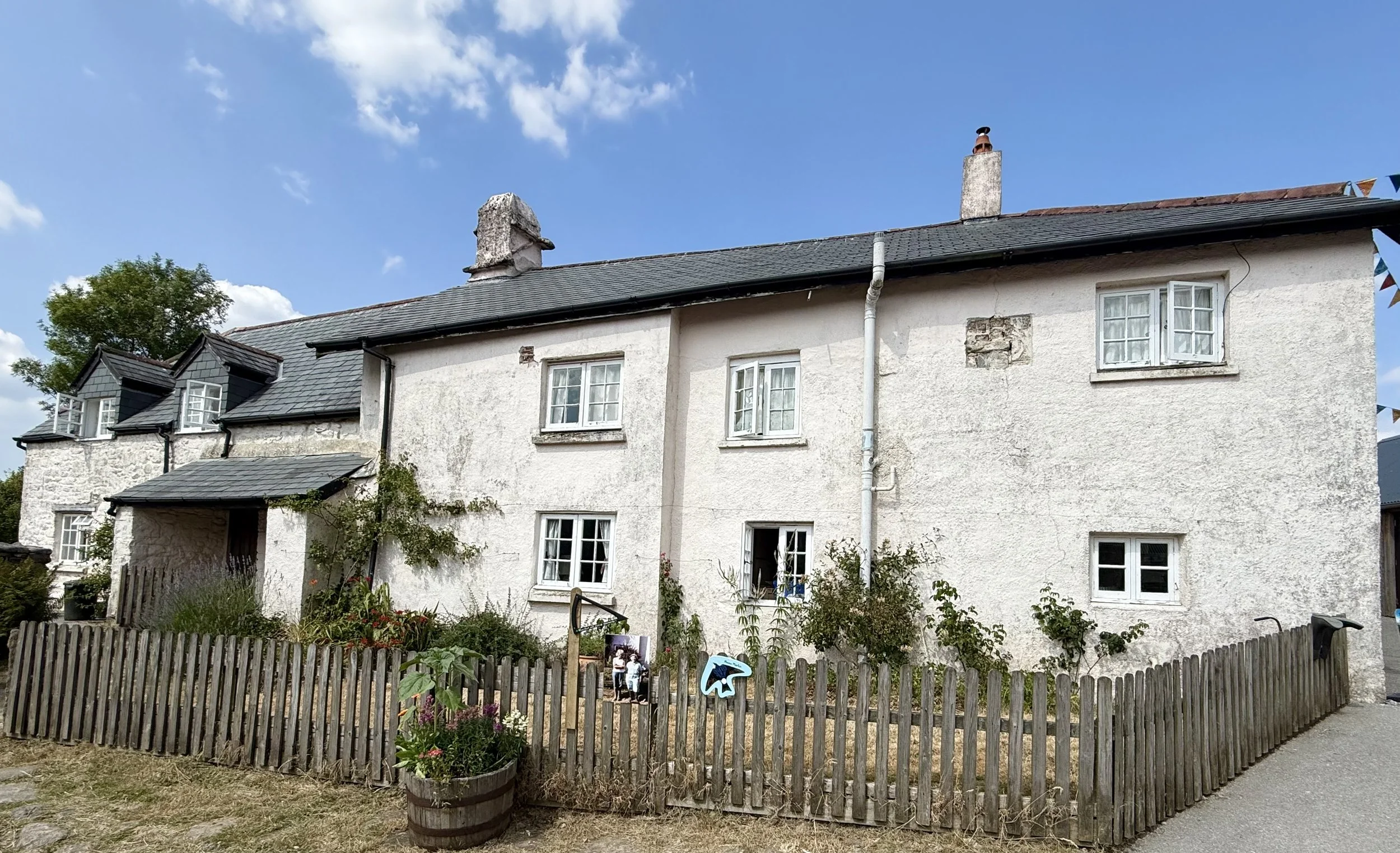
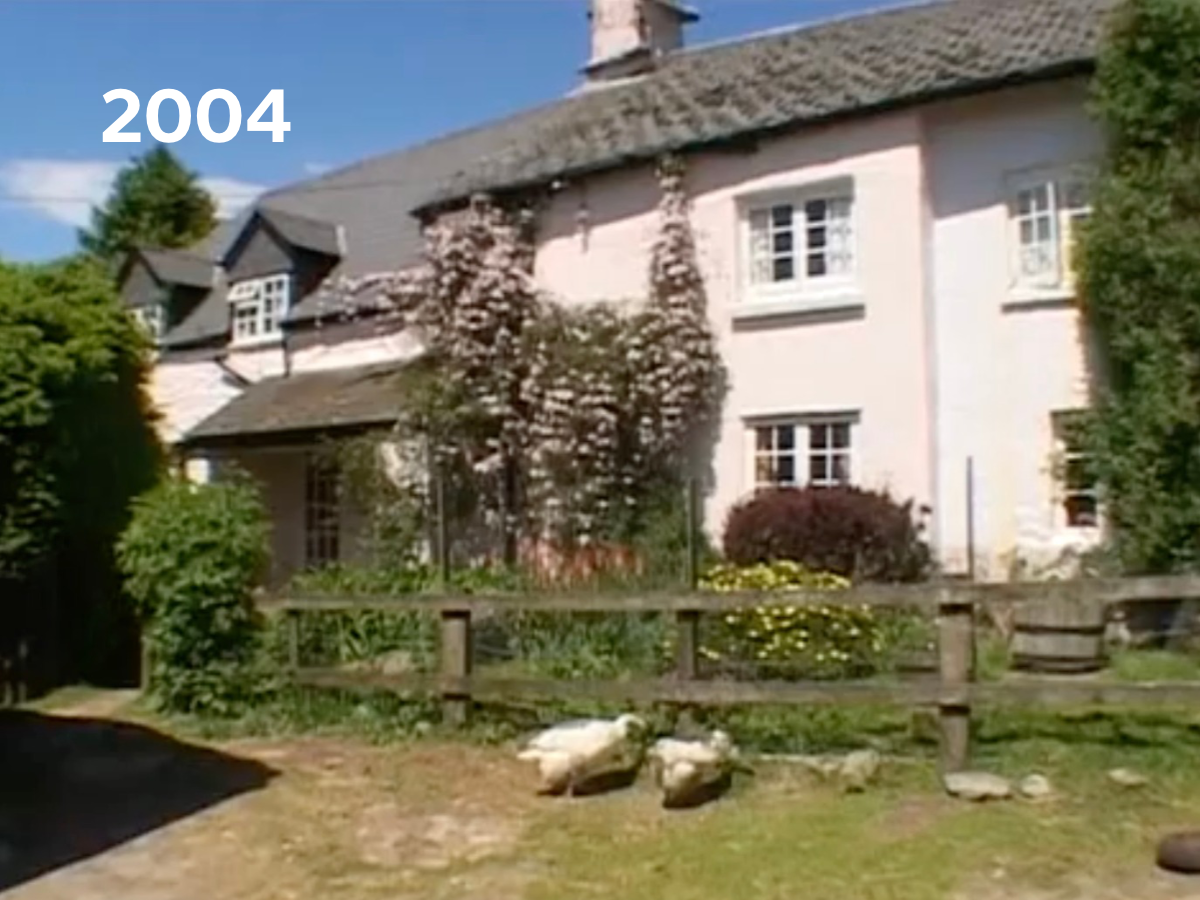
The pink picture-postcard farmhouse had retained its charm, although the wisteria that covered much of the exterior in 2004 had diminished.
I expected the interior to have changed, too. I assumed there would have been a necessary makeover over the years, and perhaps I'd feel a little disappointed that the place I remembered had been modernised beyond recognition.
I couldn't have been more wrong.
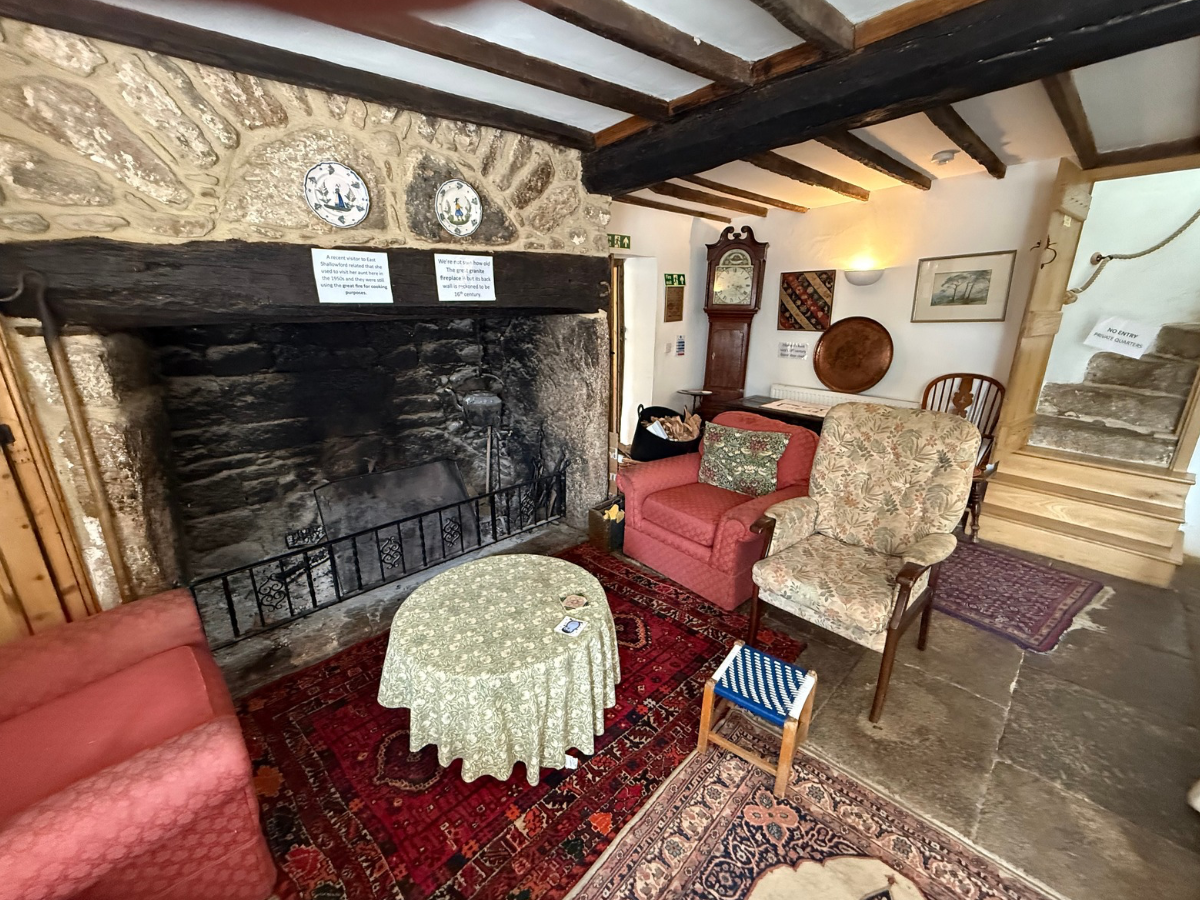
Yes, there were a few changes in the entrance hall - like the removal of a staircase leading from the upstairs dormitories - but when I stepped into the lounge, something happened that I'm still battling to put into words.
Time warp
You might say that, mentally, it stopped me in my tracks.
Now let’s be clear - I’m not saying that a cold shiver ran down my spine, or that I felt some sort of spiritual presence, I didn’t.
There was no sudden epiphany. I didn't have a lump in my throat or feel the need to wipe away a tear. But there was…. a feeling.
I stood in silence, transported back in time.
Outside, I could hear someone calling out numbers and announcing prizes. “Pink ticket! One hundred and eighty-two! You've won a jigsaw puzzle!”
But inside, I was back in 2004.
Ok. Now I know how that sounds a bit woo-woo, right? But bear with me.
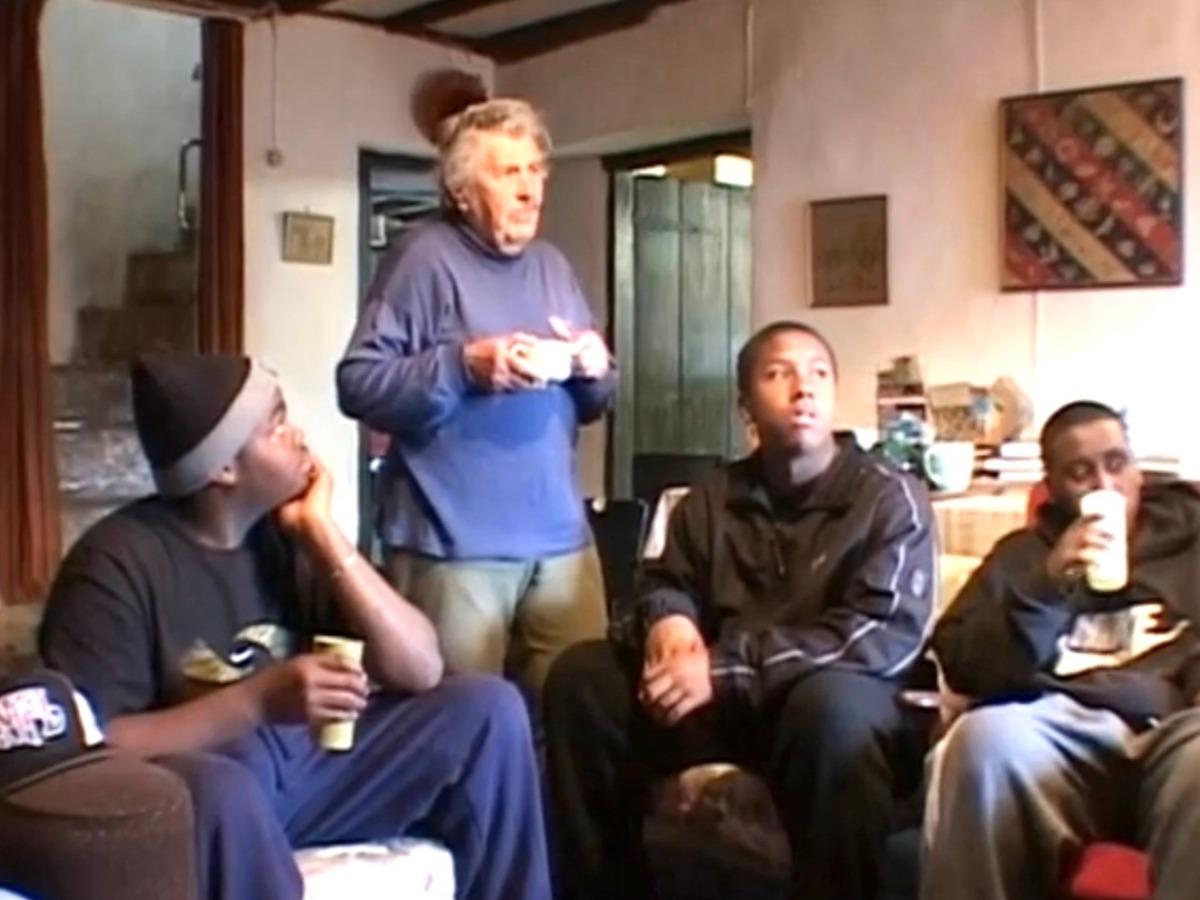
The room looked and felt so familiar that, for a moment, it felt as though everything was still going on just as it had all those years ago. I could almost hear the children. I could imagine Miss Braund being there telling them how to interact with the animals, and the whole place carrying on as it always had.
Not in a ghostly way. Nothing spooky. I’m not about to add to the long list of Dartmoor myths and legends.
In a way it was almost comforting, although I'm not sure that's the right word either.
Enchanted? Mesmerised? Gobsmacked? I just can’t find the right word to describe what I was feeling. I guess ‘wonderment’ comes close. Whatever it was, it left its mark.
I wanted to check my memory against the old footage, so I went looking for the shots I'd filmed in that very room in 2004. And there it was. The same room, the same furniture, in exactly the same arrangement - or so it seemed to me.
Twenty-two years had passed, generations of children had come and gone, yet the room itself seemed exactly as I’d remembered it. Those kids could have walked through the door, laughing and joking, at any minute.
I can't explain why that affected me quite so much. I'm not going to dress it up as some great revelation, because it wasn't that. It was simply an unexpected moment of recognition so complete that it stopped me in my tracks.
I hadn't gone to Shallowford looking for that experience. I hadn't expected to find it, but I did. Make of that what you will.
Blue skies and sunshine
The summer of 2026 was a funny one to choose for a project on Dartmoor.
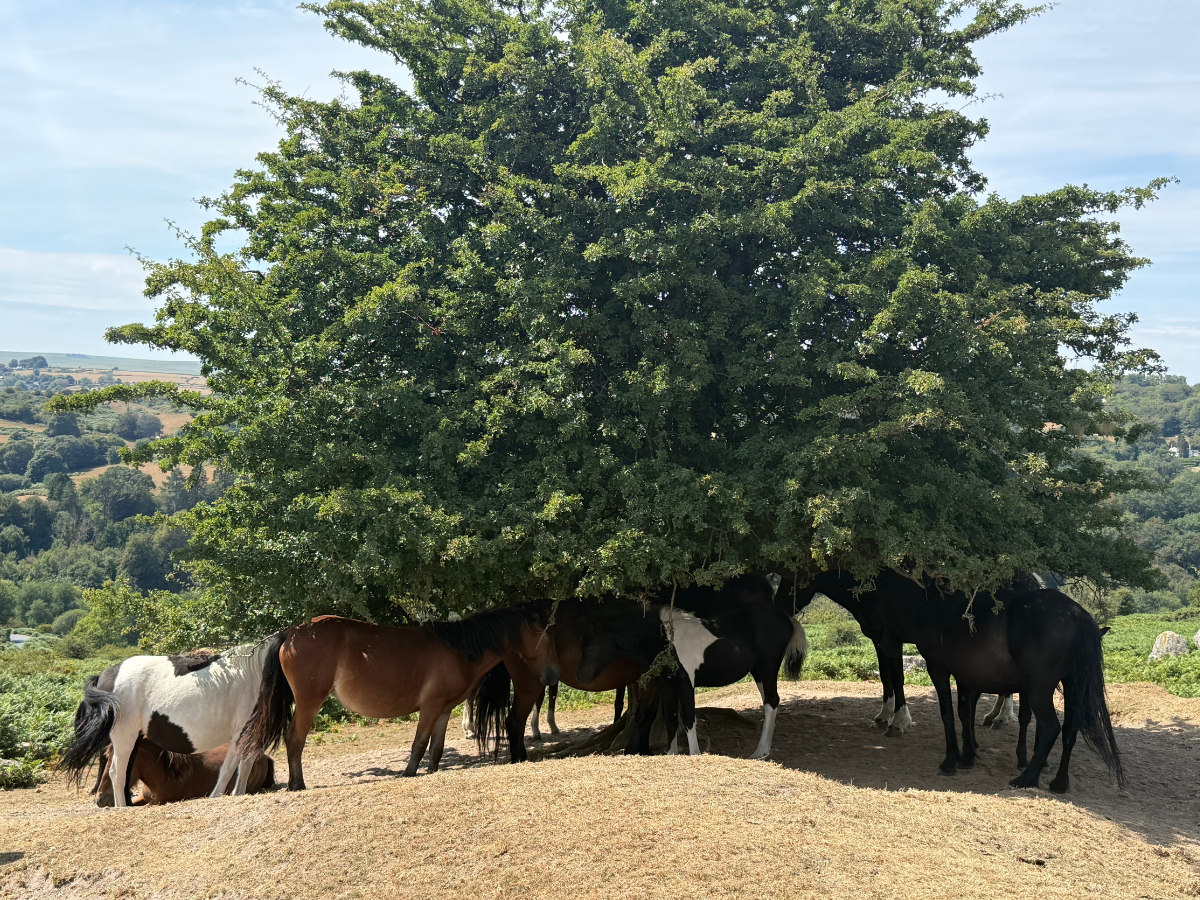
We seemed to have one heatwave after another - five, to be precise - and the moors were yellow rather than the lush green I was used to.
Shirts and T-shirts were the order of the day. I wasn't complaining though - I love blue skies and sunshine, and I love being outdoors among the animals, rivers, streams and wide-open spaces. I was in my element.
There were moments when the landscape reminded me just how much can change in 22 years, even when you're returning to somewhere you think you know well.
One of the shots I'd filmed in 2004 was a piece to camera on a lane about half a mile from the farm. I remembered leaning against a typical Dartmoor dry-stone wall, talking into the camera, with Shallowford Farm behind me in the distance.
It had been an opening shot for one of the original films, and that location was fixed in my mind. I wanted to replicate it and I knew exactly where it was - or so I thought!
Finding it again proved a lot more difficult than I was expecting.
I'd forgotten that the countryside doesn't stand still just because your memory does. Bushes had grown, trees that had been little more than saplings were now doing a brilliant job of obscuring the view, and the spot I'd remembered so clearly had been swallowed up by vegetation.
I drove up and down the lane a couple of times before admitting defeat, parking up and walking around to see if I could find the right place.
Eventually I found somewhere that was either a) the original spot or b) a close enough approximation.
Trying to get into a similar position involved clambering over a lot more greenery than before.
Thankfully technology’s moved on too and I was filming on my iPhone this time, rather than lugging around the Sony camera and tripod I'd used in 2004!
And that wasn't the only reminder that I hadn't been back for a while. I hadn't driven to the farm since those early days, but I'd rather naively assumed my brain would remember every twist and turn along the way - a sort of muscle memory of roadmapping.
It didn't.
Satnav got me there, thankfully. But my satnav has a mind of its own, and a nasty habit of losing its signal once it’s got you to your destination and parked up for a while. And on this occasion it seemed reluctant to offer any useful guidance for the return journey - just the spinning wheel of doom!
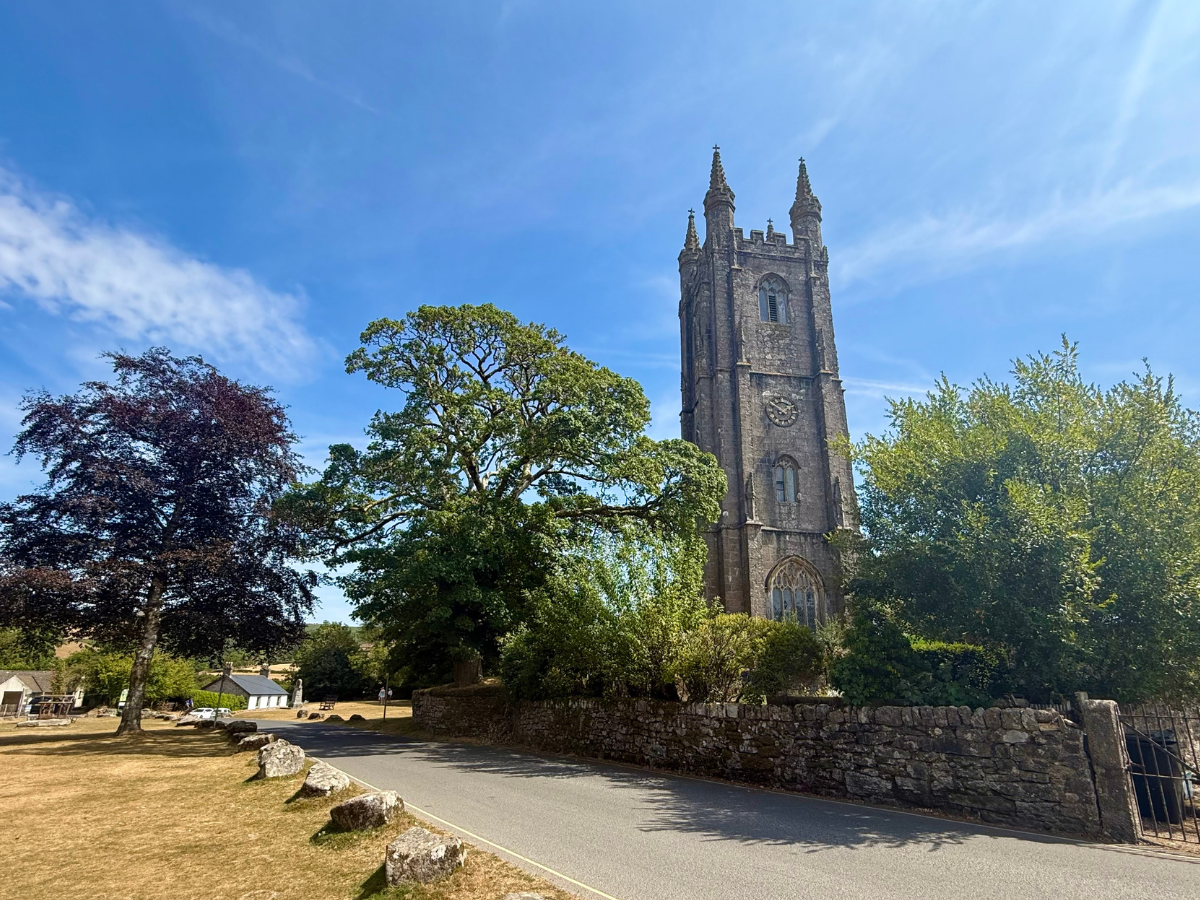
Freedom
In an act of defiance, once I’d got to higher ground and the signal returned, I switched off the satnav - telling it out loud that I’d prove I can cope very well without it (doesn’t everyone speak to their satnav?)
At every junction I ignored the signposts and flipped an imaginary coin instead, taking whichever turn fate decided.
Hey, it was sunny! There wasn’t a cloud in the sky, I was in no hurry - nowhere I needed to be and no deadlines to meet. So I just drove.
There's a particular pleasure in being able to do that. No route to follow, no need to calculate whether a detour is worth the extra 10 minutes. Just a road disappearing around a bend and the freedom to find out where it leads.
I wasn't trying to make some grand statement about life. I was simply enjoying the drive and the amazing Dartmoor countryside. And every now and again I’d stop and film something thinking ‘that could be useful for the video.’
On another day, there was the journey back to the farm itself.
As I turned the final corner and approached the bridge over the river, the memories began flooding back. This was the place where the children played after a day of chores - mucking out, weeding, building fences, collecting eggs - and where so many of the memories from those original four films seemed to live.
I remembered filming a herd of pigs being escorted through the winding lanes by a group of youngsters from Battersea.
The scene just popped into my head. The kids, the pigs, the narrow lanes, the sheer incongruity of it all.
Absolute magic!
Children from inner-city London getting stuck into country life in Devon, learning by doing, getting muddy and experiencing a world that might otherwise have been completely unfamiliar to them.
And here I was, 22 years later, filming this spot all over again.
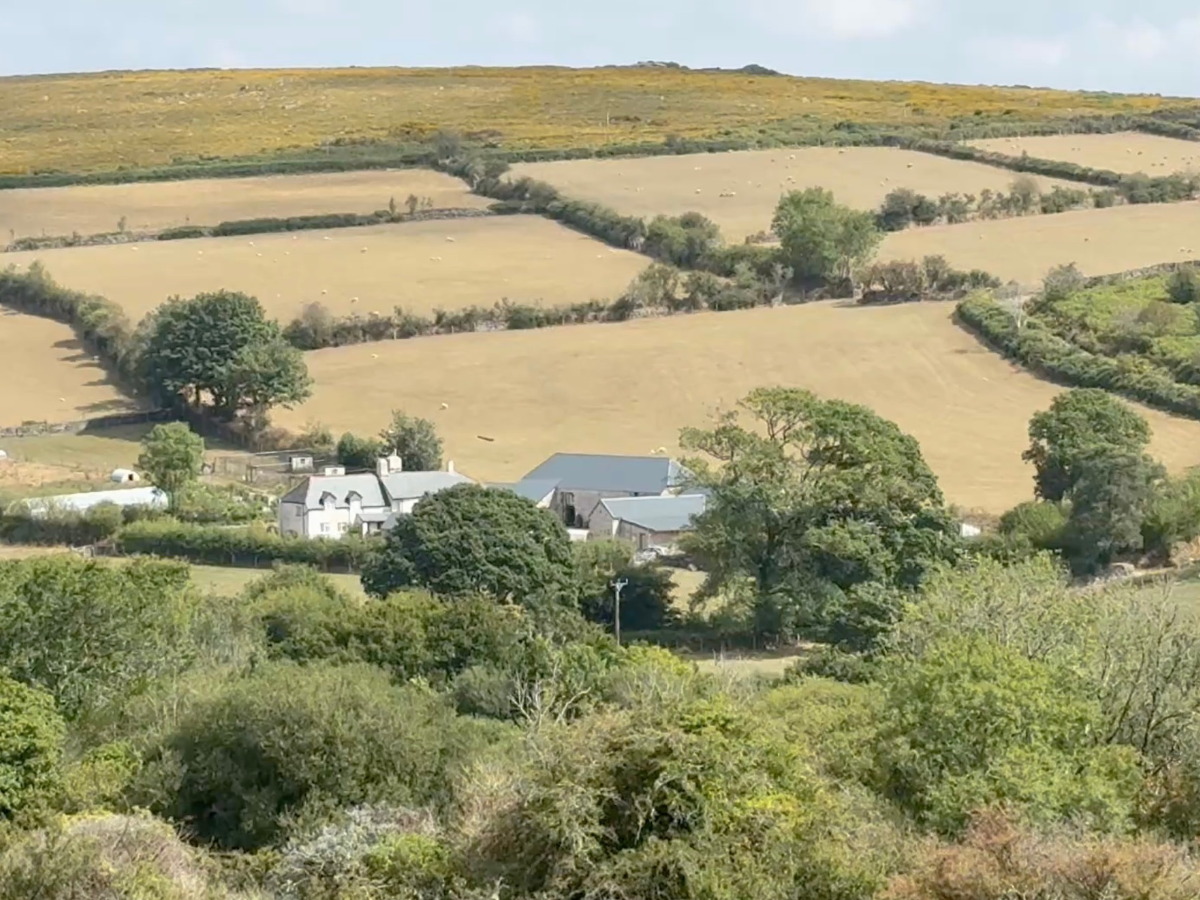
This time I had a drone, too (a birthday present to myself). The rules around flying meant I couldn't take off or land on National Park property, but the farm itself gave me opportunities to get some lovely aerial shots.
There were views I simply couldn't have captured in 2004, and seeing Shallowford from above offered a fresh perspective to a new audience.
The people are the story
Of course, the landscape and the buildings are only part of what makes Shallowford special.
The real reason for making this new film was the people: the trustees, staff, teachers, pupils and former visitors whose lives have intersected with the farm over its 50 years.
Back in the 1970s, Elizabeth Braund and Rosemary Bird had a vision of giving children from urban areas the chance to experience the countryside.
Robert Musgrave described the idea as creating “a lung for the city” - a place where children could breathe, explore, learn and experience a very different world from the one they knew at home.
The farm was purchased in 1976, and the work has continued ever since, still welcoming groups from London, but now from places much closer to home, too - like Bristol, Exeter and Plymouth.
The buildings have evolved to meet changing needs. The old barn has been transformed, accommodation has been modernised, and the farm has adapted to the demands of the 21st century. Yet the underlying idea remains recognisable.
Give children space. Let them get involved. Let them discover things for themselves. Give them opportunities to build confidence, realise the importance of teamwork and experience the natural world.
It's a simple idea, really, but one with remarkable resilience.
I spent much of the summer listening to people describe what Shallowford had meant to them. Some remembered particular activities or the people who'd looked after them. Others spoke about the sense of belonging that had stayed with them long after they'd returned home.
One former visitor, Seon, described coming back as feeling as though he was coming home. Others recalled the practical work, the animals, the river and the small adventures that had made their visits memorable.
Jason’s story
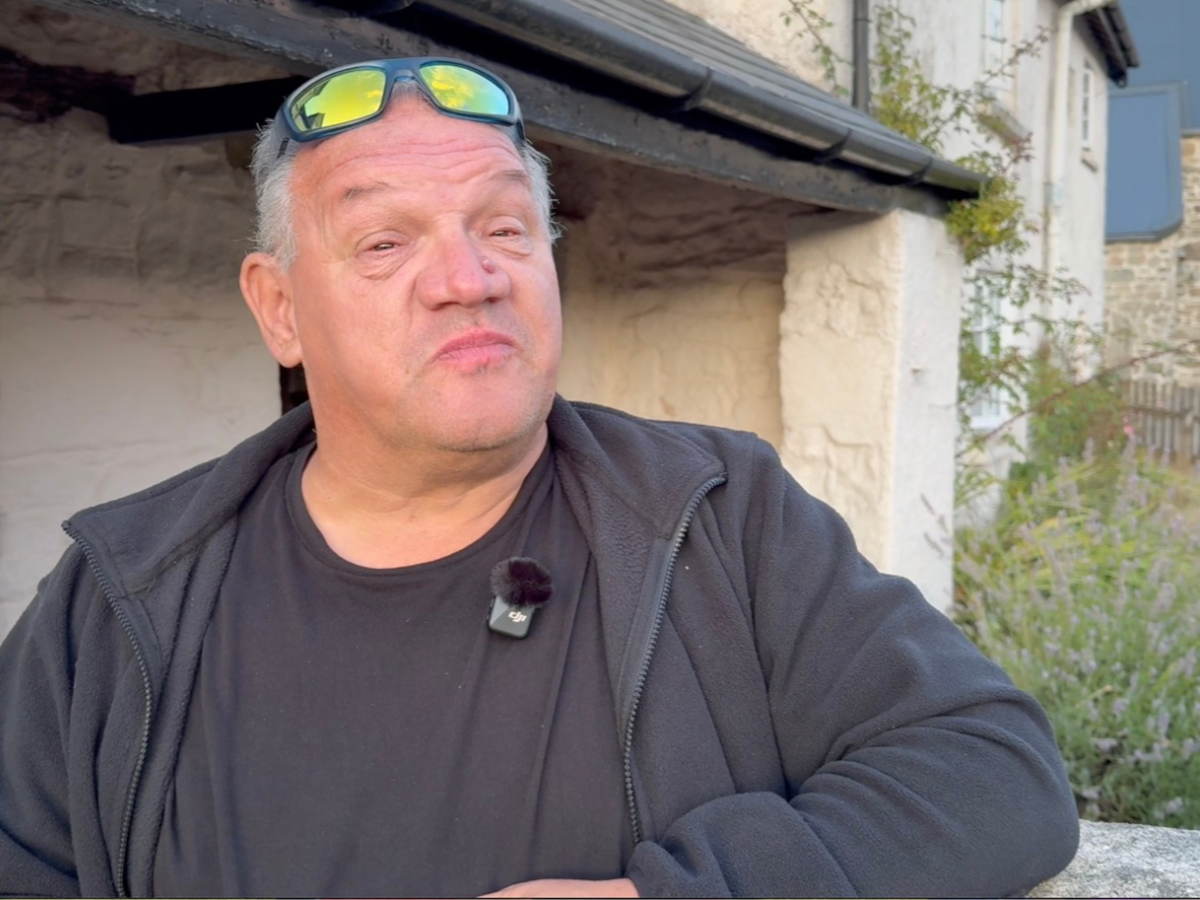
Jason first came to Shallowford as a nine-year-old in 1977.
He later served in Northern Ireland and developed combat-related post-traumatic stress disorder (PTSD).
During therapy, he was asked to identify a happy place he could return to in his mind when things became difficult.
For Jason, that place was Shallowford.
He could picture the bridge, the river and the marshy area beyond it. He could imagine walking down the lane and looking across the valley. Those memories gave him somewhere safe to go in his mind when life became dark.
Listening to him describe that was one of the most powerful moments of the whole project. I felt honoured that he had chosen to share what was obviously deeply personal.
It's difficult to know what to say about a story like that without making too much of it or trying to put words into somebody else's mouth - you’ll see when you watch the video - it deserved to be heard in his own words.
It brought home to me the significance of a place like Shallowford in a way that statistics or lists of activities never could.
We tend to think of a school residential trip as a few days away from home. A chance to learn about the countryside, try new things and have a bit of fun. And of course it is all of those things.
But sometimes the memories created there become something much more. A place a person can carry with them for the rest of their life. A source of comfort when they need it most.
You can't always know what a particular experience will mean to someone, or how long it will stay with them. Most of the time you’ll never find out - but Jason was able to tell us. And I'm truly grateful he did.
The tap of creativity
When I first agreed to make this anniversary film, I had a fairly modest plan. The original brief in my head was for something around five or six minutes long.
Ha ha - who was I kidding? There was simply too much good stuff worth including.
I wanted to hear from the people who'd been involved in Shallowford's past and present.
To show what had changed and what had stayed the same. I wanted to capture the landscape, the buildings, the atmosphere and the people who make the place what it is.
And the more I filmed, the more I realised how much there was to say.
There were interviews to record, hundreds of clips to sort through, aerial footage to consider and original material to revisit.
Some of the people I spoke to had known Shallowford for decades. Others were seeing it through much younger eyes.
I was trying to do justice to all of them, while making something that would hold together as a film rather than becoming a collection of interviews with some pretty scenery in between.
The original four films had been made for local television news. This was a different sort of project, and I wanted it to feel different.
There was no newsroom waiting for me to deliver a finished item by a particular time. No broadcast slot to squeeze into. No need to get back to the office and move on to the next assignment.
I had the freedom to spend time with the people, look for the shots I wanted and let the story develop.
That freedom was one of the joys of the whole experience.
It didn't mean everything was smooth sailing, though.
Once filming was done, I still had to make sense of all those clips and interviews. I had a huge amount of material, a growing list of possibilities and, for a while, a rather stubborn shortage of creative inspiration. I started and stopped several times - making perfectly adequate edits but just not feeling it.
You might imagine that having spent a summer surrounded by beautiful scenery and fascinating people would leave you bursting with ideas.
But sometimes, there comes a point when you’ve watched the same footage so many times that you can no longer see the wood for the trees. You know there's a film in there somewhere, but finding the way to tell it becomes a challenge of its own. How do I link all these different elements together?
If creativity could be turned on like a tap, then I guess I had my own little drought, which was rather appropriate given the parched landscape outside.
Thankfully, unlike the summer, mine was only temporary. After sleeping on it a couple of nights, suddenly the tap started dripping again - and then there was no stopping it. The flow was back and the pieces all fell into place! Phew!
The finished film runs at 21 minutes and 18 seconds (just a little over five minutes then!) But you know what? It feels like it passes in five minutes to me. I hope you’ll think so too.
Thank you
I spent several days this summer at Shallowford because someone suggested that it would be nice to have an up-to-date film for the 50th anniversary and I was happy to help.
I hadn't anticipated quite how much the experience would mean to me.
It reconnected me with people and memories I'd not thought about for years. It reminded me of the man who first took me there, and of how much he'd taught me about Dartmoor.
It gave me the chance to meet people whose lives had been shaped by a place I'd first encountered through a five-minute radio feature.
And it gave me a rather good excuse - as if one was needed - to spend a fair bit of the summer out on the moors, filming in the sunshine, exploring lanes I'd forgotten and occasionally getting a little lost on purpose.
I hope this new film will be watched by people who already know and love East Shallowford Farm, and by others who’ve never heard of it. I hope it helps explain why the Shallowford Trust's work matters, and why a farm on Dartmoor can mean so much to children growing up in a city.
For me, it's also a small way of saying thank you.
To the people who welcomed me back. To everyone who shared their memories and stories. And, particularly, to Tony Beard, who first introduced me to this remarkable place, may he rest in peace.
I’m John Govier. Thank YOU for reading this - my behind-the-scenes ramblings have ironically turned out longer than the video itself!
Happy 50th Anniversary!
To find out more, visit the East Shallowford Farm website.

NB: Positive Plymouth is not responsible for the content of external websites
You may also like…